The word orange can describe a bright color, a ripe fruit, or something that has a similar shade. If you are writing an essay, describing a painting, creating a story, or improving your English vocabulary, knowing alternative words for orange can help you express your ideas more clearly.
However, finding the right synonym for orange is not always simple. Some words describe a pale, soft shade, while others suggest a deep, warm, or reddish color. Words such as amber, tangerine, and apricot can be useful alternatives when describing colors, but they do not all mean exactly the same thing. The context matters.
This guide explores 22 useful orange color synonyms and related alternatives, with simple meanings, natural example sentences, and notes about their differences. You will also learn which terms work best in academic writing, everyday conversation, creative descriptions, and professional settings.
Whether you want to describe autumn leaves, a sunset, a piece of clothing, or a colorful design, this guide will help you choose a word that fits your meaning instead of repeating orange in every sentence.
What Does “Orange” Mean?
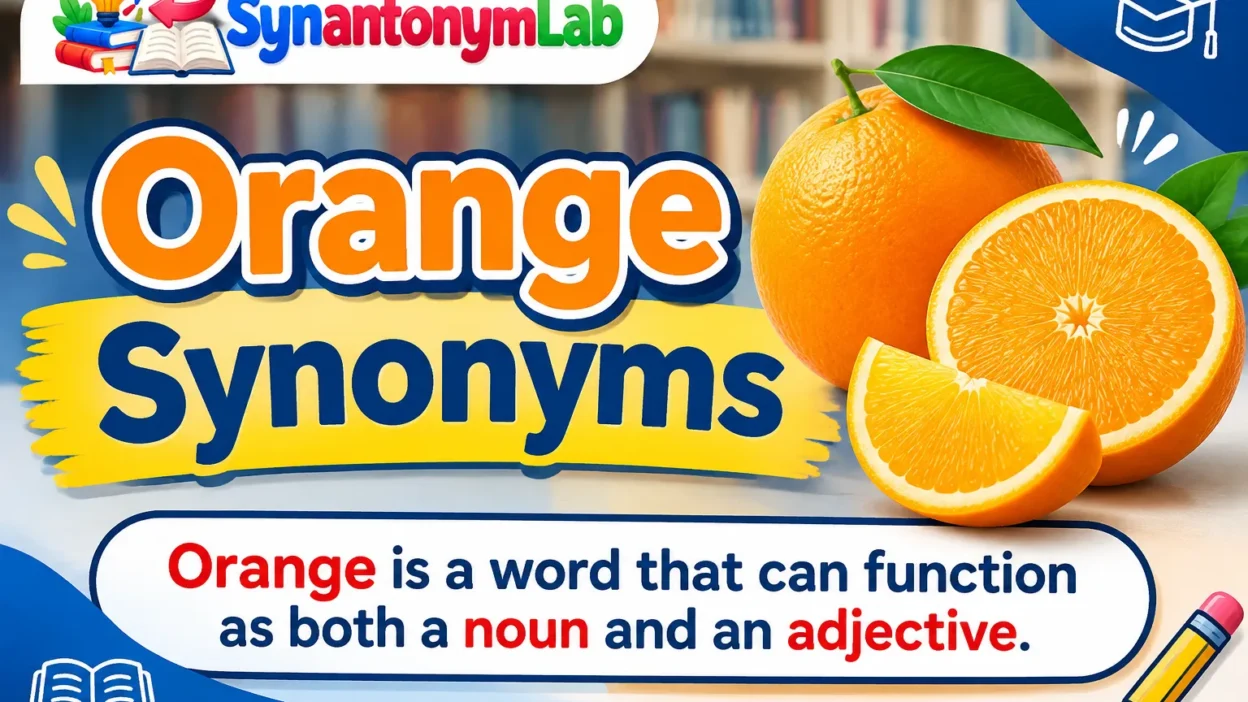
Orange is a word that can function as both a noun and an adjective.
As a noun, it can refer to a color between red and yellow on the visible color spectrum. It can also refer to a round citrus fruit with orange-colored skin and juicy flesh.
As an adjective, orange describes something that has this color. For example, you might write, “She wore an orange scarf,” or “The sky turned orange at sunset.”
When people search for orange synonyms, they often want alternative words for the color rather than the fruit. This distinction is important because the best alternative depends on the meaning.
Orange has many shades. Pale orange may look soft and creamy, while bright orange can appear vivid and energetic. Dark orange may have brown or red undertones. These differences make color-specific alternatives useful.
The word itself is common, neutral, and suitable for casual, academic, and professional writing. Most alternative color names are more specific than orange, so they should be chosen carefully. For example, peach suggests a lighter, softer shade, while rust usually suggests a darker, reddish-brown shade.
Not every related color name is a perfect synonym. Some describe particular shades, and others refer to fruits or materials associated with orange.
22 Best Synonyms for “Orange”
These 22 options are useful alternatives for describing orange shades. Some are close color alternatives, while others refer to specific hues or familiar objects. Choose the one that matches the color you want to describe.
1. Amber
Tone: Descriptive / Literary
Amber describes a warm golden-orange color, often with yellow or brown undertones.
Example: The amber light filled the room as the sun began to set.
Best use: Use amber for warm light, autumn scenes, jewelry, and rich golden-orange shades. It is not the best choice for a bright, pure orange.
2. Tangerine
Tone: Casual / Descriptive
Tangerine describes a vivid, lively orange shade associated with the citrus fruit.
Example: She chose a tangerine dress for the summer party.
Best use: This word works well for bright clothing, cheerful designs, and colorful decorations. It often sounds more specific and vivid than orange.
3. Apricot
Tone: Descriptive / Casual
Apricot refers to a soft, light orange shade with yellow or peach-like undertones.
Example: The walls were painted a gentle apricot color.
Best use: Choose apricot for pale orange shades in interior design, clothing, flowers, and artwork. It is softer and less intense than bright orange.
4. Peach
Tone: Casual / Descriptive
Peach describes a light, warm shade that combines orange with pinkish or creamy tones.
Example: The artist used peach paint to create a soft glow on the portrait.
Best use: Use peach when the color looks light, delicate, or slightly pink. It is not an exact replacement for strong orange.
5. Coral
Tone: Descriptive / Creative
Coral is a warm color that usually combines orange with pink or red.
Example: The coral curtains added warmth to the white living room.
Best use: This word is useful for fashion, home decor, flowers, and visual design. Coral may look more pink or more orange depending on the shade.
6. Rust
Tone: Descriptive / Literary
Rust describes a muted, earthy color that combines orange with red and brown.
Example: Rust-colored leaves covered the garden path.
Best use: Choose rust for autumn leaves, aged metal, earthy fabrics, and warm interior colors. It suggests a deeper, less vivid shade than orange.
7. Pumpkin
Tone: Casual / Descriptive
Pumpkin describes a rich orange shade inspired by the skin of a pumpkin.
Example: He painted the front door a bold pumpkin shade.
Best use: Use pumpkin for seasonal decorations, clothing, crafts, and warm color palettes. It usually suggests a strong, slightly earthy orange.
8. Saffron
Tone: Descriptive / Formal**Saffron describes a rich yellow-orange color associated with the spice of the same name.Example: Saffron fabric gave the room a warm, golden glow.Best use: This term suits textiles, art, food-related descriptions, and decorative designs. Saffron is often more yellow than a typical orange.
9. Ochre
Tone: Artistic / AcademicOchre refers to an earthy pigment that can appear yellow, golden, or orange-brown.Example: The painter used ochre tones to show the dry landscape.Best use: Use ochre when discussing painting, natural pigments, soil, or earthy color schemes. It does not always describe orange because ochre can also be yellow or brown.
10. Vermilion
Tone: Artistic / FormalVermilion is a vivid red pigment, often with an orange-like appearance.Example: Vermilion details stood out against the pale background.Best use: Choose vermilion when the shade leans strongly toward red. It is a more specific color term, not a general synonym for every orange shade.
11. Flame
Tone: Literary / DescriptiveFlame can describe a brilliant orange or orange-red color that resembles fire.Example: A flame-colored ribbon brightened her dark coat.Best use: This word works well in creative writing, fashion descriptions, and vivid visual imagery. It emphasizes brightness and warmth.
12. Copper
Tone: Descriptive / ProfessionalCopper describes a metallic-looking reddish-orange or brownish-orange shade.Example: The copper lamps reflected the afternoon light.Best use: Use copper for metal finishes, hair color descriptions, jewelry, and decorative objects. It often suggests a metallic shine or reddish-brown tone.
13. Burnt Orange
Tone: Descriptive / CasualBurnt orange is a deep, muted orange with brown or red undertones.Example: Burnt orange cushions gave the sofa a cozy autumn look.Best use: This phrase is especially useful in fashion, home decor, sports uniforms, and seasonal designs. It is darker and earthier than standard orange.
14. Golden Orange
Tone: Descriptive / ProfessionalGolden orange describes a warm orange shade with a noticeable golden-yellow quality.Example: Golden orange light spread across the fields.Best use: Choose this phrase for sunsets, lighting, autumn landscapes, and design descriptions. It is more precise than orange when yellow undertones matter.
15. Yellow-Orange
Tone: Academic / TechnicalYellow-orange describes a shade positioned between yellow and orange.Example: The chart used yellow-orange to highlight the middle category.Best use: This term is useful in color theory, art lessons, charts, and scientific descriptions. It is clear and direct rather than decorative.
16. Red-Orange
Tone: Academic / DescriptiveRed-orange describes an orange shade with a stronger red component.Example: The designer selected red-orange for the main heading.Best use: Use it in graphic design, painting, and color analysis when the shade is warmer or redder than ordinary orange.
17. Persimmon
Tone: Descriptive / CreativePersimmon describes a rich orange or orange-red shade inspired by the fruit.Example: The persimmon scarf added a bright accent to her outfit.Best use: This term works well for clothing, cosmetics, seasonal palettes, and decorative art. Its exact appearance can vary from yellow-orange to reddish-orange.
18. Papaya
Tone: Casual / DescriptivePapaya can describe a warm, tropical orange shade, often with a pink or coral undertone.Example: The website used a papaya accent color for its buttons.Best use: This word is helpful in branding, fashion, and summer-inspired designs. Because it is a shade name, it is less suitable for formal technical writing unless the color is clearly understood.
19. Marigold
Tone: Descriptive / LiteraryMarigold describes a bright golden-yellow to orange color inspired by the flower.Example: Marigold curtains brought a sunny feel to the kitchen.Best use: Use marigold for floral descriptions, clothing, crafts, and cheerful color palettes. Some marigold shades are closer to yellow than orange.
20. Cantaloupe
Tone: Casual / DescriptiveCantaloupe can describe a pale, warm orange shade with a soft peach or melon-like quality.Example: The designer chose cantaloupe for the nursery walls.Best use: This term suits soft interiors, pastel palettes, and gentle visual designs. It is much lighter and less intense than vivid orange.
21. Salmon
Tone: Descriptive / CasualSalmon describes a pinkish-orange color, sometimes with a muted red tone.Example: She wore a salmon blouse with cream trousers.Best use: Choose salmon for clothing, makeup, artwork, and decor when pink is an important part of the shade. It is not a suitable substitute for pure orange.
22. Fire Orange
Tone: Creative / DescriptiveFire orange describes an intense, bright orange that suggests the vivid color of flames.Example: The team used fire orange lettering on its black jerseys.Best use: This phrase is suitable for bold designs, sports graphics, posters, and creative descriptions. It emphasizes visual intensity rather than providing a universal technical color name.Quick tip: For a bright orange, try tangerine, pumpkin, or fire orange. For a soft shade, choose peach, apricot, or cantaloupe. For an earthy look, use rust, copper, or burnt orange.
Stronger Alternatives
When ordinary orange does not fully express the brightness or depth of a color, a more vivid term may work better. These alternatives are useful when you want a strong visual effect.
- Tangerine: Suggests a lively, vivid orange. Use it for bright clothes, graphics, and summer designs.
- Fire orange: Emphasizes a bold, flame-like shade. It works well for striking visual details.
- Vermilion: Adds a strong red quality. Use it when the orange shade leans toward red.
- Persimmon: Suggests a rich orange or orange-red tone. It suits warm fashion and decorative palettes.
- Pumpkin: Conveys a full, rich orange. It is useful for seasonal decorations and bold accents.
- Flame: Creates a dramatic image of fiery orange or orange-red. It suits expressive writing and visual descriptions.
- Burnt orange: Gives the color a deeper, earthier feel. Use it when vivid orange would sound too bright.
These are not all stronger in the same way. Tangerine suggests brightness, vermilion suggests a redder hue, and burnt orange suggests depth. Choose according to the actual color rather than assuming that every alternative is more intense.
Softer or Polite Alternatives
Color words do not usually express politeness in the same way that words for people or actions do. However, softer color names can make descriptions sound gentler, calmer, or less bold.Here are seven options for situations where bright orange feels too strong.
- Peach: A light, warm shade with a pinkish quality. It works well for gentle designs, soft clothing, and calm descriptions.
- Apricot: A light orange with a warm, creamy feel. Use it for walls, fabrics, and subtle accents.
- Cantaloupe: A pale, melon-like orange. It suits soft color palettes and welcoming interior designs.
- Salmon: A pinkish-orange shade. It works well when you want warmth without a strong orange appearance.
- Coral: A blend of orange and pink or red. It can feel lively without looking as bold as vivid orange.
- Pale orange: A lighter version of orange. It is a straightforward choice when clarity matters more than style.
- Pastel orange: A soft, muted orange shade. It is useful for gentle illustrations, invitations, and light visual themes.
For example, compare these sentences:
- Bold: The room had bright orange walls.
- Softer: The room had pale orange walls.
- More decorative: The room had peach-colored walls.
Each sentence describes a different shade. Choose the one that matches the color and mood you want to convey.
Academic & IELTS-Friendly Alternatives
In academic writing and IELTS tasks, the best color vocabulary is usually precise, clear, and appropriate to the subject. A simple term is often better than a decorative one if it describes the image accurately.The following 10 alternatives are useful for describing images, charts, artwork, landscapes, and color patterns.
| Alternative | Meaning and best use | Example |
|---|---|---|
| Amber | A golden-orange shade | Amber light appeared near the horizon. |
| Ochre | An earthy yellow, golden, or orange-brown pigment | Ochre tones dominated the landscape painting. |
| Vermilion | A vivid red pigment or red-orange appearance | Vermilion details were visible in the artwork. |
| Yellow-orange | A shade between yellow and orange | The chart contains a yellow-orange section. |
| Red-orange | Orange with stronger red undertones | The red-orange area represents the highest category. |
| Burnt orange | A deep, earthy orange | Burnt orange appears in several parts of the design. |
| Copper | A reddish-orange or brownish-orange metallic shade | Copper-colored objects appear in the foreground. |
| Golden orange | Orange with noticeable golden-yellow tones | Golden orange dominates the sunset scene. |
| Coral | A pinkish-orange shade | Coral tones make the composition feel warmer. |
| Apricot | A pale, warm orange shade | Apricot appears along the edges of the illustration. |
How to use these words in academic writing
1. Describe the visible shade. If the color is between yellow and orange, yellow-orange is more precise than amber.2. Use artistic terms when relevant. Ochre and vermilion are useful when discussing pigments or painting techniques. They may be unnecessarily specific in a basic description.3. Avoid replacing every instance of orange. If a report describes a chart, using orange consistently may be clearer than switching among several shade names.4. Match the evidence. If you cannot clearly identify a red undertone, do not call the shade red-orange. If the image shows a pale color, apricot or peach may be more accurate.5. Do not confuse advanced vocabulary with better writing. IELTS examiners value clear, accurate language. A well-used word such as orange can be better than an unusual color name used incorrectly.For IELTS Academic Writing Task 1, you might write, “The orange section increased between the first and second years.” If the chart distinguishes a golden-orange section from a red-orange one, those more specific labels can help readers follow the data.
Synonyms You Should Avoid
Some words may seem like good alternatives for orange, but they can change the meaning or describe a different color. They are not always wrong; they simply need the right context.
1. Yellow
Yellow is a separate color, even though some orange shades have yellow undertones.Awkward: The bright orange car was painted yellow.Better: The bright orange car was painted tangerine.Use yellow only when the color is actually yellow or the distinction is unimportant in context.
2. Red
Red is not a direct synonym for orange. Some shades, such as vermilion, lean toward red, but the colors are still distinct.Awkward: She wore a red dress when the dress was clearly orange.Better: She wore a red-orange dress.Use red-orange when the color genuinely falls between red and orange.
3. Brown
Brown can have orange undertones, but it generally describes a different color.Awkward: The bright orange flowers looked brown.Better: The flowers had a burnt-orange color.Choose brown only when the shade appears brown rather than clearly orange.
4. Gold
Gold may describe a metallic finish or a rich yellow color. It is not a direct replacement for every orange shade.Awkward: The bright orange poster had a gold background.Better: The bright orange poster had a golden-orange background.Use gold when the color or material genuinely has a golden appearance.
5. Pink
Pink is not a synonym for orange, although coral, salmon, and peach can contain pinkish tones.Awkward: The orange wall was painted pink.Better: The wall was painted peach.Choose pink only when the shade is actually pink. If the color blends pink and orange, a more specific term may be helpful.The main lesson is simple: related colors are not automatically synonyms. The replacement should describe what the reader can actually see.
How to Choose the Right Synonym in Writing
Choosing the right orange alternative depends on more than finding a different word. You need to consider the shade, purpose, audience, and tone of your sentence.
1. Match the actual color
Start by looking at the shade.
- Light orange: peach, apricot, or cantaloupe
- Bright orange: tangerine or fire orange
- Golden orange: amber or golden orange
- Earthy orange: rust, copper, or burnt orange
- Reddish orange: persimmon, coral, or red-orange
These are general guides, not fixed rules. Lighting, screens, and different color systems can affect how a shade appears.
2. Consider your audience
For everyday readers, simple terms are often best. Words such as peach, pumpkin, and rust are easy to understand.For a technical report, terms such as yellow-orange and red-orange may be more useful because they describe the shade directly.For a creative story, amber or flame-colored can help create a vivid image.
3. Match the tone
Different words create different impressions.
- Peach often feels soft and gentle.
- Tangerine feels bright and lively.
- Amber suggests warmth and a golden quality.
- Rust creates an earthy, autumn-like impression.
- Flame-colored sounds vivid and dramatic.
These effects depend on the sentence and the surrounding description.
4. Keep the sentence clear
Do not replace orange just to avoid repetition. If the same color appears several times in a report, repeating the word may be clearer than using inaccurate alternatives.For example:The orange line shows sales in January. The orange line rises in February.A clearer version is:The orange line shows sales in January. It rises in February.The second sentence avoids repetition without changing the color’s meaning.
5. Use the right form of the word
Most shade names can be used before a noun or after a linking verb.
- Before a noun: an amber lamp
- After a linking verb: The lamp looked amber.
Some descriptions use a compound phrase:
- a burnt-orange jacket
- a red-orange flower
- a golden-orange sky
When a compound color adjective comes before a noun, hyphenation can improve readability. Follow the style guide used in your publication.
6. Think about the purpose
If you are writing product descriptions, precise color names help customers picture an item. If you are describing a sunset, more expressive words may create a stronger image. If you are writing a science report, clear and consistent labels matter more than creative variation.The best synonym is the one that helps readers understand the color correctly.
Example Paragraph Rewritten Using Synonyms
One useful way to learn color vocabulary is to compare how different shade names change a description.Original paragraphThe orange sunset spread across the sky. Orange leaves covered the ground, and an orange scarf hung around the girl’s neck. The scene looked warm and colorful.Rewritten paragraphThe amber sunset spread a golden glow across the sky. Rust-colored leaves covered the ground, while a tangerine scarf added a bright touch to the girl’s outfit. The scene felt warm, vivid, and full of autumn color.
Why do these alternatives work?
- Amber sunset: Highlights the golden quality of the evening light.
- Rust-colored leaves: Suggests the deep, earthy shades often associated with autumn.
- Tangerine scarf: Emphasizes a brighter, more vivid shade of orange.
- Golden glow: Adds a sense of warmth without repeating the word orange.
The revised paragraph is more descriptive because each color term serves a different purpose. However, these words should only be used if they match the colors being described. Synonyms improve writing when they add precision, not when they simply replace familiar words.
FAQs
1. What are the best synonyms for orange?
Some useful orange color alternatives include amber, tangerine, apricot, peach, coral, rust, pumpkin, and burnt orange. Each describes a particular shade, so the best choice depends on the color you mean.
2. What is another word for bright orange?
Tangerine, fire orange, and pumpkin are useful alternatives for a bright orange shade. Tangerine suggests a vivid, lively color, while fire orange emphasizes a bold, flame-like appearance.
3. What is a synonym for light orange?
Peach, apricot, and cantaloupe can describe light orange shades. Peach tends to have a pinkish quality, while apricot often looks warmer and more golden.
4. What is a darker shade of orange called?
Burnt orange, rust, and copper are common terms for darker orange shades. Burnt orange is earthy, rust often leans toward red and brown, and copper can have a metallic appearance.
5. Is amber another word for orange?
Amber is a useful alternative when orange has a golden or yellow-brown quality. However, amber is more specific than orange and should not be used for every shade.
6. What is the difference between orange and tangerine?
Orange is a broad color term, while tangerine usually describes a vivid orange shade. Tangerine is useful when you want to emphasize brightness or a lively appearance.
7. Can I use orange synonyms in academic writing and IELTS?
Yes. Terms such as amber, ochre, yellow-orange, red-orange, and burnt orange can be useful when they accurately describe the subject. For charts and graphs, prioritize clear labels and consistent wording over variety.
Conclusion
Orange has many useful color alternatives, but each one creates a slightly different picture. Tangerine works well for vivid shades, apricot and peach suit softer colors, and amber, rust, and burnt orange describe warmer or earthier tones.
The key is to choose words based on the color you actually mean, the audience you are writing for, and the effect you want to create.
In essays, professional reports, creative writing, and everyday conversation, precise vocabulary makes descriptions easier to understand and more engaging to read.Instead of replacing orange with any related color name, choose the word that helps your reader picture the right shade.

Milo Carter is a passionate writer who loves exploring words, synonyms, and antonyms. Through SynantonymLab, he helps readers improve their English vocabulary and language skills.