The word stoic describes someone who remains calm and controlled during pain, stress, hardship, or difficult situations. It is often used to praise people who face problems without complaining or showing strong emotions. However, being stoic does not always mean feeling nothing. A person may experience sadness, fear, or disappointment while choosing not to express those feelings openly.
Finding the right synonyms of stoic can help you describe emotional strength, self-control, patience, and resilience more clearly. This is useful when writing essays, professional reports, personal messages, stories, or everyday conversations. Different words can express different sides of the same quality. For example, composed suggests calm behavior, while resilient highlights the ability to recover from difficulty.
In this guide, you will discover 24 useful alternatives to stoic, along with their meanings, tones, and natural example sentences. You will also learn which stronger, softer, and academic alternatives work best in different situations, helping you choose words that fit your message.
What Does “Stoic” Mean?
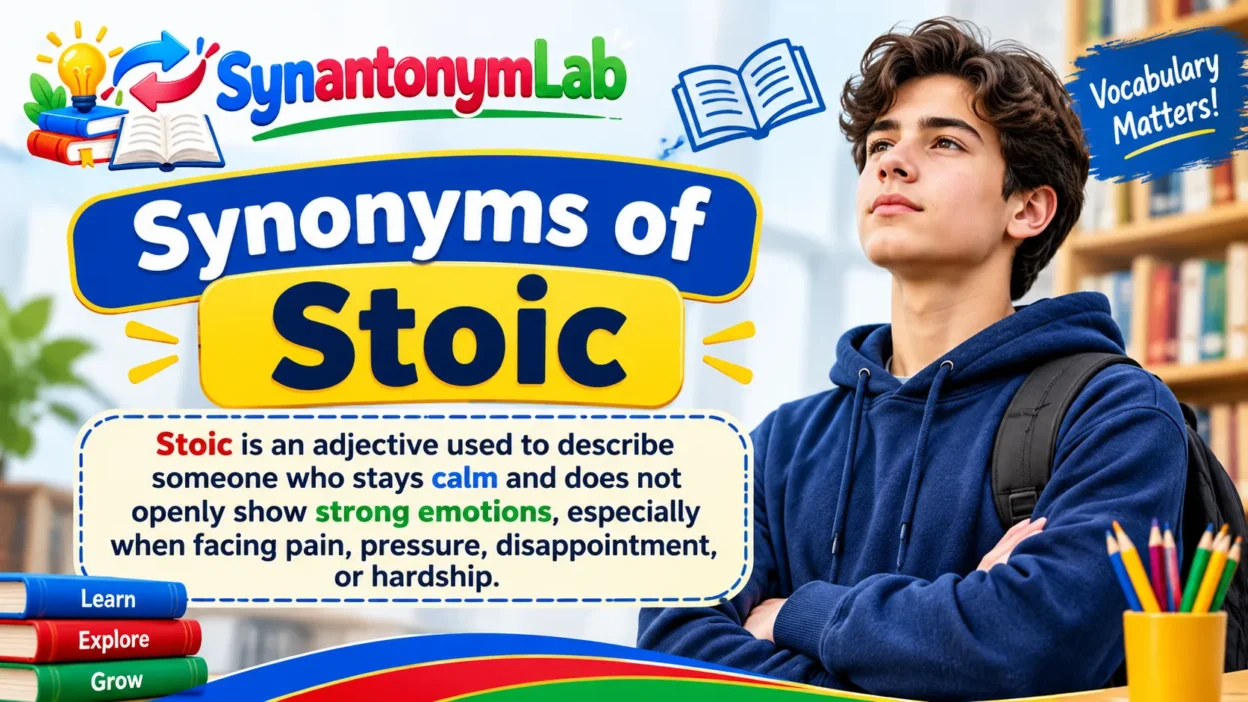
Stoic is an adjective used to describe someone who stays calm and does not openly show strong emotions, especially when facing pain, pressure, disappointment, or hardship.
A stoic person may experience difficult feelings but chooses to manage them rather than react emotionally. For example, someone who receives disappointing news but responds calmly may be described as stoic.
The word can also describe an attitude of accepting difficult situations without unnecessary complaints. It is commonly used in conversations about emotional control, personal strength, difficult experiences, and challenging circumstances.
Part of speech: Stoic is mainly an adjective in everyday use. It can also be a noun when referring to a person who follows Stoicism, the ancient Greek and Roman philosophical tradition.
Tone and connotation: The word is generally positive when it describes courage, discipline, and emotional control. However, it can sometimes suggest that someone hides their feelings or appears emotionally distant.
Important distinction: Being stoic does not mean being emotionless. It means managing emotional reactions, particularly when circumstances are difficult.
For example:
- She remained stoic during the difficult meeting.
- He showed a stoic attitude after receiving the disappointing news.
In both examples, the person experiences a difficult situation but does not allow their emotions to control their outward response.
24 Best Synonyms for “Stoic”
Here are 24 useful synonyms and close alternatives. Some describe emotional calmness, while others focus on endurance, courage, or self-control. Their meanings are related, but they are not interchangeable in every sentence.
1. Composed
Meaning: Calm and in control of your emotions, especially during a stressful situation.
Tone: Formal / Professional
Example: Despite the unexpected problem, the manager remained composed.
Difference: Composed focuses on calm behavior and emotional control. It is one of the closest alternatives when describing someone’s outward reaction.
2. Unflappable
Meaning: Not easily upset, worried, or disturbed by difficult events.
Tone: Informal / Professional
Example: Our teacher remained unflappable when the students became noisy.
Difference: Unflappable suggests that someone stays calm even when other people might panic. It often describes a naturally steady personality.
3. Resilient
Meaning: Able to recover from difficulties and continue after setbacks.
Tone: Academic / Professional
Example: She remained resilient after facing several personal challenges.
Difference: Resilient focuses on recovering and adapting rather than hiding emotions. It is useful when describing long-term strength.
4. Steadfast
Meaning: Firm and determined, especially when facing challenges or pressure.
Tone: Formal
Example: He remained steadfast in his decision despite criticism.
Difference: Steadfast emphasizes commitment and determination more than emotional calmness.
5. Unemotional
Meaning: Showing little or no emotion in your reactions or behavior.
Tone: Formal / Neutral
Example: He gave an unemotional response to the difficult announcement.
Difference: Unemotional is close to stoic when discussing outward expressions. However, it can suggest a lack of visible feeling rather than controlled emotions.
6. Self-controlled
Meaning: Able to manage feelings, behavior, and reactions.
Tone: Formal
Example: She remained self-controlled during the heated discussion.
Difference: Self-controlled highlights personal discipline. It is especially useful when someone must resist an emotional reaction.
7. Impassive
Meaning: Showing no obvious emotion through facial expressions or behavior.
Tone: Formal / Literary
Example: The witness remained impassive while answering the difficult questions.
Difference: Impassive focuses on a person’s outward expression. It can sound colder than stoic.
8. Patient
Meaning: Able to accept delays, problems, or difficulties without becoming angry or frustrated.
Tone: Casual / Neutral
Example: He remained patient while waiting for the final decision.
Difference: Patient emphasizes tolerance and the ability to wait calmly. It does not necessarily suggest courage or emotional endurance.
9. Tolerant
Meaning: Willing to accept uncomfortable situations, differences, or behavior without reacting harshly.
Tone: Formal / Neutral
Example: She was tolerant of the delays during the project.
Difference: Tolerant focuses on acceptance rather than emotional restraint. It is suitable when someone handles inconvenience without complaint.
10. Level-headed
Meaning: Able to think clearly and make sensible decisions under pressure.
Tone: Informal / Professional
Example: We need a level-headed leader during this difficult time.
Difference: Level-headed emphasizes clear thinking instead of emotional expression. It is especially useful in workplace and decision-making contexts.
11. Untroubled
Meaning: Appearing free from worry, anxiety, or distress.
Tone: Neutral / Literary
Example: He seemed untroubled by the criticism.
Difference: Untroubled suggests that someone does not appear worried. Unlike stoic, it may describe a person who genuinely feels little concern.
12. Resolute
Meaning: Firmly determined to continue despite difficulties.
Tone: Formal
Example: She remained resolute throughout the challenging negotiations.
Difference: Resolute highlights strong determination rather than emotional silence. It works well when describing firm decisions.
13. Enduring
Meaning: Able to continue through hardship, pain, or difficulty over time.
Tone: Formal / Literary
Example: His enduring spirit helped him face years of hardship.
Difference: Enduring focuses on lasting strength and the ability to withstand difficulties. It is often more natural for describing a quality than a person’s immediate reaction.
14. Forbearing
Meaning: Patient and willing to control anger or irritation when dealing with difficult behavior.
Tone: Formal
Example: The manager was forbearing when the new employee made mistakes.
Difference: Forbearing emphasizes patience with other people’s actions. It is less common in everyday conversation than patient or tolerant.
15. Unshaken
Meaning: Not discouraged, frightened, or disturbed by difficult circumstances.
Tone: Formal / Literary
Example: She remained unshaken despite the negative comments.
Difference: Unshaken emphasizes emotional or mental stability when facing pressure or criticism.
16. Disciplined
Meaning: Able to control actions and follow a plan even when things become difficult.
Tone: Formal / Professional
Example: He stayed disciplined throughout the demanding training program.
Difference: Disciplined focuses on self-management and consistent behavior rather than emotional expression.
17. Courageous
Meaning: Willing to face danger, pain, or difficulty despite fear.
Tone: Neutral / Formal
Example: The courageous patient faced the difficult treatment with determination.
Difference: Courageous emphasizes bravery. A stoic person may also be courageous, but the two words describe different qualities.
18. Hardy
Meaning: Strong enough to withstand difficult conditions.
Tone: Neutral / Literary
Example: The hardy traveler continued despite the freezing weather.
Difference: Hardy often describes physical strength, toughness, or the ability to survive harsh conditions.
19. Uncomplaining
Meaning: Accepting discomfort or hardship without frequently expressing dissatisfaction.
Tone: Neutral
Example: She remained uncomplaining during the long and tiring journey.
Difference: Uncomplaining focuses on not expressing dissatisfaction. It does not always suggest emotional calmness.
20. Phlegmatic
Meaning: Having a calm temperament and being slow to become excited, angry, or upset.
Tone: Formal / Academic
Example: His phlegmatic nature helped him handle unexpected problems calmly.
Difference: Phlegmatic describes a naturally calm temperament. It is more specialized and less common than composed.
21. Equable
Meaning: Having a calm, steady, and even temperament that does not change easily.
Tone: Formal / Literary
Example: Her equable nature made her a reliable person during stressful situations.
Difference: Equable describes consistent emotional behavior rather than a single reaction to hardship.
22. Unperturbed
Meaning: Not worried, upset, or disturbed by something unexpected.
Tone: Formal
Example: He appeared unperturbed by the sudden change in plans.
Difference: Unperturbed is especially useful when describing someone who remains calm despite a surprising or troubling event.
23. Tenacious
Meaning: Determined to continue working toward something despite obstacles.
Tone: Formal / Professional
Example: The tenacious athlete continued training after several setbacks.
Difference: Tenacious emphasizes persistence and determination rather than emotional restraint.
24. Stoical
Meaning: Showing calm acceptance and emotional control during pain or hardship.
Tone: Formal / Literary
Example: He maintained a stoical expression throughout the difficult experience.
Difference: Stoical is a closely related form of stoic and can often be used in the same contexts. It is not a completely different synonym, but it offers a useful variation in writing.
Stronger Alternatives
Sometimes stoic does not fully express the level of strength or determination a person demonstrates. In these situations, stronger alternatives can communicate greater emotional endurance, bravery, or resistance.
Here are seven useful choices:
1. Unyielding: Describes someone who refuses to give up or change their position despite pressure.
Example: She remained unyielding in the face of criticism.
2. Indomitable: Suggests a spirit or determination that cannot easily be defeated.
Example: His indomitable spirit helped him overcome repeated setbacks.
3. Iron-willed: Describes someone with extremely strong self-control and determination.
Example: The iron-willed leader stayed focused during the crisis.
4. Dauntless: Describes someone who faces danger or difficulty without showing fear.
Example: The dauntless firefighter entered the burning building.
5. Unbreakable: Suggests extraordinary mental or emotional strength.
Example: She showed an unbreakable commitment to her family.
6. Invincible: Describes someone or something that seems impossible to defeat.
Example: The team felt invincible after winning several difficult matches.
7. Iron-nerved: Describes someone who remains calm and controlled in highly stressful or dangerous situations.
Example: The iron-nerved pilot handled the emergency with remarkable control.
Choosing the right stronger word: Use indomitable for powerful determination, dauntless for bravery, and iron-nerved for calmness under extreme pressure. These words add intensity but do not all mean exactly the same thing as stoic.
Softer or Polite Alternatives
The word stoic can sometimes sound as if someone is hiding their feelings or refusing to show vulnerability. If you want a gentler description, consider these alternatives.
1. Calm: Someone who is relaxed and not easily disturbed.
Example: She stayed calm during the unexpected delay.
2. Composed: Someone who manages emotions in a balanced way.
Example: He remained composed while discussing the problem.
3. Patient: Someone who accepts delays or difficulties without becoming frustrated.
Example: The teacher was patient with the struggling student.
4. Steady: Someone who remains consistent and emotionally balanced.
Example: Her steady approach helped the team feel confident.
5. Collected: Someone who maintains control and thinks clearly during pressure.
Example: He stayed collected during the important interview.
6. Even-tempered: Someone whose mood does not change quickly.
Example: Our supervisor is even-tempered and easy to approach.
7. Level-headed: Someone who makes sensible decisions without becoming overwhelmed by emotion.
Example: She offered a level-headed response to the disagreement.
These alternatives are useful in everyday conversation, workplace communication, and polite descriptions of someone’s personality. They communicate calmness without necessarily suggesting that a person suppresses their feelings.
Academic & IELTS-Friendly Alternatives
When writing academic essays, reports, or IELTS responses, you may need more precise vocabulary than stoic. The following words can help describe emotional control, determination, and the ability to manage difficult situations.
| Word | Meaning and appropriate use |
|---|---|
| Composed | Calm and emotionally controlled during pressure. |
| Resilient | Able to recover from hardship or setbacks. |
| Impassive | Showing little visible emotion. |
| Phlegmatic | Having a naturally calm temperament. |
| Equable | Maintaining a steady and balanced mood. |
| Resolute | Firmly determined despite difficulties. |
| Self-disciplined | Able to manage behavior and impulses. |
| Unperturbed | Not visibly worried or disturbed. |
| Forbearing | Patient when dealing with difficult behavior. |
| Steadfast | Remaining firm in beliefs or commitments. |
| Emotionally controlled | Managing emotional reactions carefully. |
| Unflappable | Remaining calm despite unexpected problems. |
Examples in academic-style writing:
- Resilient individuals may recover more effectively from challenging experiences.
- The composed response of the team leader helped prevent further confusion.
- A self-disciplined approach can support better decision-making under pressure.
- The researcher remained unperturbed by criticism during the discussion.
- A steadfast commitment to the project helped the team achieve its goals.
IELTS writing tip: Do not choose a word simply because it sounds advanced. For example, resilient is more suitable when discussing recovery from hardship, while impassive is better when describing an expression that shows little emotion. Accurate word choice matters more than complicated vocabulary.
Synonyms You Should Avoid
Some words may seem similar to stoic, but they can change the original meaning. Understanding these differences helps prevent awkward or misleading sentences.
1. Emotionless
Why to be careful: Emotionless suggests an absence of feelings, while stoic usually describes someone who controls how they express emotions.
Better choice: Use composed when describing controlled emotional behavior.
2. Cold
Why to be careful: Cold can suggest a lack of warmth, kindness, or sympathy. A stoic person may still be caring and compassionate.
Better choice: Use impassive when you mean someone shows little emotion.
3. Indifferent
Why to be careful: Indifferent means having little interest or concern about something. A stoic person may care deeply but remain calm.
Better choice: Use unperturbed when someone is not visibly disturbed.
4. Passive
Why to be careful: Passive suggests a lack of action, resistance, or initiative. Stoic people can be active, determined, and responsible.
Better choice: Use steadfast when describing someone who remains firm during challenges.
5. Submissive
Why to be careful: Submissive describes someone who accepts another person’s authority or control. It does not mean remaining calm during hardship.
Better choice: Use self-controlled when describing emotional discipline.
These words are not always incorrect. They simply describe different qualities, so using them as direct replacements can change your intended message.
How to Choose the Right Synonym in Writing
Choosing the right alternative depends on what you want readers to understand about a person or situation. Although many words are related to stoic, each one highlights a different quality.
Here are seven practical points to consider.
1. Understand the context
Think about the situation before choosing a replacement.
- Use composed for calm behavior during a difficult event.
- Use resilient for someone who recovers from hardship.
- Use steadfast for someone who remains committed.
- Use uncomplaining for someone who accepts discomfort without complaining.
2. Consider the tone
Some words sound positive, while others may suggest emotional distance.
For example, unflappable often sounds like praise, while impassive can sound neutral or slightly cold.
3. Think about your audience
Casual readers may understand calm or patient more easily than phlegmatic or equable.
For general communication, simple vocabulary is often the clearest choice.
4. Check the level of formality
For professional writing, composed, resilient, and resolute are useful choices.
For everyday conversation, calm, steady, and level-headed may sound more natural.
5. Match the emotional strength
Not every situation requires a powerful word.
- Calm describes a relaxed state.
- Composed suggests emotional control.
- Unshaken suggests resistance to pressure.
- Indomitable suggests extraordinary determination.
6. Keep the original meaning
Ask yourself whether the replacement describes emotional control, courage, patience, or persistence.
For example, replacing stoic with indifferent may suggest that someone does not care, which could be the opposite of your intended meaning.
7. Check grammar and sentence flow
Make sure the replacement fits the sentence naturally.
Correct: She remained composed during the interview.
Correct: She showed remarkable resilience during the interview.
Incorrect: She remained resilience during the interview.
The noun resilience cannot directly replace the adjective stoic. Grammar is just as important as meaning when choosing synonyms.
Example Paragraph Rewritten Using Synonyms
One of the easiest ways to understand vocabulary is to see how different alternatives work in a complete paragraph.
Original paragraph:
James remained stoic during the difficult period at work. Even when problems appeared, he stayed calm and continued doing his job. His ability to manage pressure helped his colleagues feel more confident.
Rewritten paragraph 1: Using composed and resilient
James remained composed during the difficult period at work. Even when problems appeared, he showed resilience and continued doing his job. His ability to manage pressure helped his colleagues feel more confident.
Why it works: Composed describes his calm behavior, while resilience highlights his ability to handle ongoing difficulties.
Rewritten paragraph 2: Using steadfast and uncomplaining
James remained steadfast during the difficult period at work. Even when problems appeared, he stayed uncomplaining and continued doing his job. His consistent attitude helped his colleagues feel more confident.
Why it works: Steadfast emphasizes his determination, while uncomplaining highlights his willingness to face difficulties without expressing dissatisfaction.
Rewritten paragraph 3: Using level-headed and unflappable
James remained level-headed during the difficult period at work. Even when unexpected problems appeared, he stayed unflappable and continued doing his job. His calm approach helped his colleagues feel more confident.
Why it works: Level-headed highlights sensible thinking, while unflappable emphasizes his ability to remain calm when unexpected problems arise.
These examples show why synonyms should be selected according to meaning rather than exchanged mechanically.
FAQs
1. What are the best synonyms of stoic?
Some of the best alternatives include composed, resilient, steadfast, unflappable, impassive, self-controlled, resolute, and unperturbed. The best choice depends on whether you want to describe calmness, emotional control, or strength during hardship.
2. What is another word for stoic in a positive way?
Resilient, composed, steadfast, and unflappable are positive alternatives. They describe someone who handles difficult situations with strength, calmness, or determination.
3. What is the opposite of stoic?
Possible opposites include emotional, expressive, sensitive, demonstrative, and reactive. The best opposite depends on whether you mean someone who openly shows feelings or someone who reacts strongly to difficult situations.
4. Does stoic mean emotionless?
No. Stoic does not necessarily mean emotionless. A stoic person can experience strong feelings but chooses to manage their reactions instead of expressing every emotion openly.
5. What is a formal synonym for stoic?
Formal alternatives include impassive, phlegmatic, equable, resolute, composed, and unperturbed. Each word has a slightly different meaning, so choose one that fits the sentence.
6. What is a synonym for stoic when describing someone who never complains?
Uncomplaining is a suitable choice. It describes someone who accepts difficult conditions without frequently expressing dissatisfaction. Forbearing may also work when the focus is patience with other people’s behavior.
7. Can resilient and stoic be used interchangeably?
Not always. Stoic focuses on managing outward emotional reactions, while resilient describes the ability to recover and adapt after difficulties. Someone can be both stoic and resilient, but the words emphasize different qualities.
Conclusion
Choosing the right synonym for stoic helps you describe emotional strength, calm behavior, patience, and determination with greater accuracy.
Words such as composed, unflappable, and impassive work well when discussing emotional control, while resilient, steadfast, and resolute highlight the ability to face challenges.
The most important thing is to consider the situation, tone, and meaning before replacing the original word. A good synonym should make your writing clearer, not change the message.
Whether you are writing an academic essay, a professional report, or a casual conversation, the right vocabulary will help you express your ideas naturally and confidently.

Milo Carter is a passionate writer who loves exploring words, synonyms, and antonyms. Through SynantonymLab, he helps readers improve their English vocabulary and language skills.